AJOT: The U.S. Sets the Pace for Maritime Nuclear
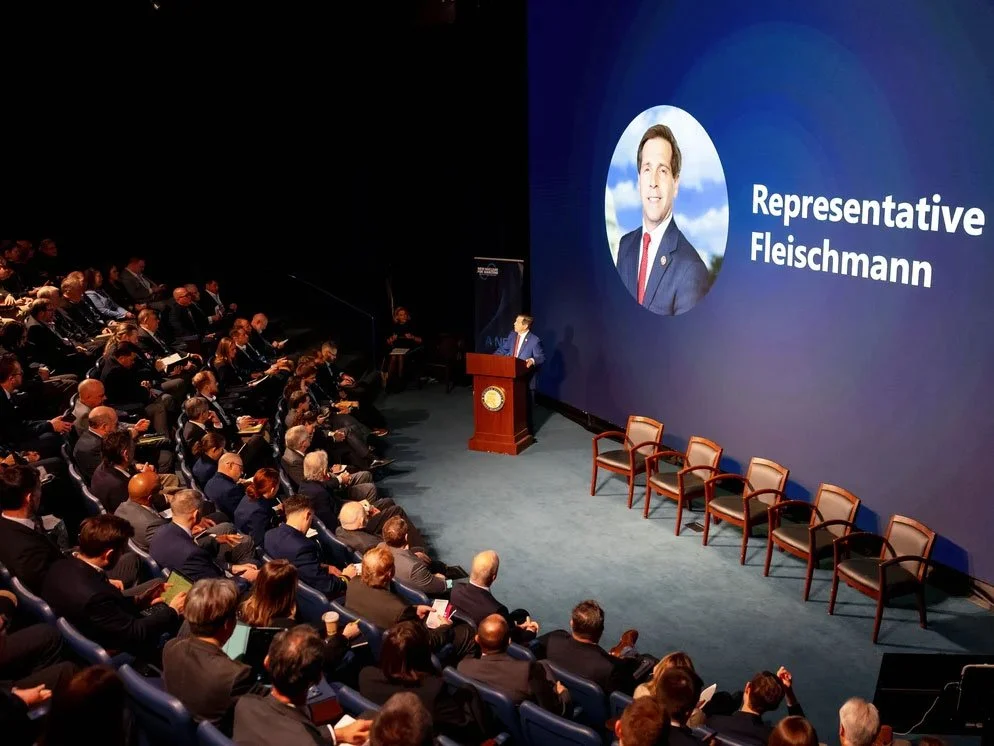
On 4 February 2026, leaders from the maritime, nuclear and energy sectors gathered at the U.S. Navy Memorial in Washington, D.C., for CORE POWER’s largest U.S. summit to date, New Nuclear for Maritime: A New Era for the United States.
Opening the event, CORE POWER's Group Head Market Development, Charlotte Vere, highlighted the moment as an inflection point: the United States, having pioneered naval nuclear propulsion, now faces a strategic opportunity to extend that capability into civilian maritime applications. Discussions throughout the day focused on two complementary pathways - floating nuclear power plants for ports and coastal industry, and nuclear propulsion for commercial shipping - with a shared emphasis on aligning policy, regulation and industrial capacity to move maritime nuclear from concept to deployment.
U.S. leadership in maritime nuclear
The morning opened with a keynote from Rian Bahran (U.S. Department of Energy), followed by a panel discussion featuring Mikal Bøe (CORE POWER), Chris Wiernicki (former ABS CEO), Admiral John Richardson (former Chief of Naval Operations, U.S. Navy) and Stephen Carmel (U.S. Maritime Administration). Together, they explored how growing U.S. government support for advanced nuclear could translate into practical maritime deployment.
Bahran described how the Department of Energy is accelerating nuclear progress through funding programs, national laboratory capabilities, and new executive actions. With rising energy demand, including from AI infrastructure, DOE sees maritime applications as a priority and is supporting early technical and regulatory work.
Wiernicki emphasized that building a viable commercial maritime nuclear ecosystem will require coordinated progress across policy, ship integration and design, regulatory development, safety frameworks, and commercial pathways. Demonstrating a reactor at sea, he suggested, would be a critical step in moving from concept studies to operational confidence.
Drawing on his experience leading the U.S. Navy, Richardson reflected on how earlier eras of nuclear development advanced rapidly when national focus aligned with strategic need, arguing maritime nuclear could again strengthen industrial capacity, workforce development, and long-term energy resilience. Carmel added that faster vessels must be matched by modernised ports and logistics systems, alongside consistent government processes that reduce risk for first movers.
In a following keynote, Representative Chuck Fleischmann (U.S. House of Representatives) reinforced that congressional backing is also gathering pace. As Chair of the Energy & Water Development Appropriations Subcommittee, he noted that recent funding bills already support advanced nuclear programmes and that maritime applications could benefit from similar bipartisan momentum. Drawing on the example of the U.S. nuclear navy, he framed maritime nuclear as both an energy and national security issue, tied to shipbuilding competitiveness and industrial renewal.
Fleischmann emphasized that clear policy direction, workable regulatory pathways, and market demand will be essential to deployment, alongside progress on permitting, fuel cycle strategy, and long-term investment frameworks. Collaboration across Congress, federal agencies, industry, and academia, he suggested, will determine how quickly the United States can establish leadership in this emerging sector.
From policy to practice: regulatory pathways taking shape
A panel on regulatory progress brought together Scott Edwards (CORE POWER), Amy Roma (Hogan Lovells), Alec Neller (U.S. Nuclear Regulatory Commission), Virginia Crosbie (NEMO), and Patrick Ryan (ABS) to examine how maritime nuclear is moving from policy discussion to practical implementation.
From the regulator’s perspective, Alec Neller outlined how the NRC is working to make existing licensing pathways more efficient while developing internal expertise relevant to maritime applications. He noted that multiple regulatory routes could be available depending on the project, and encouraged early engagement from developers to help shape robust safety cases. Floating nuclear power plants (FNPPs), he suggested, may be able to follow regulatory approaches similar to past precedents, while propulsion applications would require careful adaptation of existing frameworks.
Patrick Ryan described how classification societies are also advancing in parallel. ABS has already published classification rules for floating nuclear power plants and is developing further guidance, including “nuclear-ready” notations that allow ship and yard designs to anticipate future nuclear integration. He emphasized that classification, like licensing, must evolve to address radiological controls and other requirements unique to nuclear systems in a maritime environment.
On the legal and insurance front, Amy Roma highlighted the complexity of overlapping maritime and nuclear liability regimes. While U.S. law provides a framework for domestic nuclear liability, she noted that international operations would require clearer agreements between states to ensure insurability and supply chain confidence. Liability and insurance, she stressed, remain foundational issues for commercial deployment.
Virginia Crosbie outlined NEMO’s role in bridging maritime and nuclear regulatory communities, helping identify gaps and facilitate dialogue across institutions such as the IMO and IAEA. Rather than reinventing regulatory systems, she emphasized the importance of aligning existing frameworks to ensure maritime nuclear is demonstrably safe, insurable, and internationally viable.
Across the discussion, a consistent theme emerged: licensing, classification, liability, and international coordination can proceed in parallel, but sustained collaboration between regulators, industry, and international bodies will be essential to translate regulatory momentum into real-world projects.
Security, safeguards, and strategic leap
Matt Napoli of the U.S. National Nuclear Security Administration (NNSA) framed maritime nuclear as both a technological and strategic inflection point. He noted that the United States has led in naval nuclear propulsion for decades and argued that the same level of ambition and coordination is now needed to advance civil maritime nuclear applications.
Napoli emphasized three guiding principles shaping the NNSA’s approach: action, urgency, and balanced risk management. With geopolitical competition intensifying, he stressed that progress cannot stall, but that expansion must be accompanied by strong security and safeguards frameworks. Maritime nuclear, he suggested, is a clear example of where non-proliferation, security, and commercial innovation must evolve together.
He highlighted the importance of designing security and safeguards into systems from the outset, ensuring that nuclear-powered vessels are viewed as safe, secure, and operationally viable rather than as regulatory burdens. Engagement with international institutions, including the IAEA, was described as a key part of building confidence and common standards as the sector develops.
Napoli concluded that maritime nuclear deployment is not a question of if, but who will lead. A strong domestic industry, supported by effective safeguards and international cooperation, he said, would serve as a force multiplier for U.S. economic and strategic interests.
Fission at sea: the future of shipping
A keynote from Brent Sadler of The Heritage Foundation set the tone for a discussion focused on maritime power, trade, and geopolitical competition. Sadler highlighted the strategic importance of sea power to global commerce and argued that energy resilience at sea will be a defining factor in future economic and national security. He framed advanced nuclear propulsion as a technology capable of reshaping endurance, logistics, and operational reach for both commercial and strategic maritime fleets.
The panel that followed brought together perspectives from ship design, operations, and workforce development. Morgan Fanberg (Glosten) discussed the naval architecture considerations involved in integrating nuclear systems into commercial platforms, emphasizing the need to treat reactor integration, safety systems, and vessel mission as a single design challenge. Sam Norton (OSG) added an operator’s perspective, highlighting the commercial drivers that will influence adoption, including fuel stability, voyage flexibility, and long-term cost predictability.
Jerry Paul pointed to the importance of workforce readiness and institutional capability, noting that successful deployment depends not only on technology but on building the training, safety culture, and operational frameworks required to support it. Erin Teige (CORE POWER), contributing to the technical discussion, reinforced the view that modern reactor systems are being developed with inherent safety and operational resilience suited to maritime environments.
Together, the session highlighted a shared conclusion: nuclear propulsion is moving from theoretical possibility toward practical consideration, but success will depend on aligning vessel design, commercial models, and workforce capability with the realities of operating at sea.
Technology criteria for nuclear in maritime
In a fireside discussion, Mikal Bøe (CORE POWER), Phil Malone (CORE POWER), and Admiral John Richardson focused on how to move maritime nuclear from concept to deployment. The emphasis was on pragmatism: while advanced Generation IV designs are promising, progress depends on selecting technologies mature enough to be built, operated, and improved through real-world experience.
Malone noted that reactor choices must start with maritime requirements - including size, weight, maintainability, and ship integration - rather than assuming land-based systems can be transferred directly offshore. Richardson pointed to floating nuclear power plants (FNPPs) as a practical first step, offering a pathway to gain operational, regulatory, and industrial experience before moving to propulsion applications.
The discussion also covered enabling factors beyond technology. Speakers highlighted the importance of clear deployment timelines, coordinated regulation, and pilot programs to build confidence among regulators, insurers, and the public. Industrial capacity - including shipyard integration, workforce development, and supporting fuel and maintenance infrastructure - was identified as equally critical to success.
Portable power, global reach: the strategic case for FNPPs
Richard Kidd opened the session by framing floating nuclear power plants (FNPPs) at the intersection of energy security, national security, and maritime capability. He argued that advanced nuclear is one of the few remaining strategic technologies where the United States and its allies can still compete with China, not by matching scale, but by leading in innovation, safety, and high-value applications. In Kidd’s view, FNPPs represent a dual-use capability with clear defence relevance, able to deliver reliable, secure electricity to military installations, ports, and other critical infrastructure where resilience is increasingly essential.
The discussion that followed explored how this strategic case translates into real-world demand. Nick Irvin (Southern Company) pointed to unprecedented growth in electricity needs and suggested FNPPs could offer a more predictable “speed to power” pathway than many conventional projects. Jeffrey Pollack (Port of Corpus Christi Authority) highlighted ports as natural energy hubs with concentrated demand for power and heat, making them logical early use cases for floating nuclear. Alberto Morandi (NOV) reinforced the commercial drivers, noting that energy security, demand growth, and decarbonization pressures are not cyclical trends but long-term structural forces shaping investment decisions.
Discussion returned repeatedly to the competitive landscape. Speakers stressed that the West’s advantage lies not in volume manufacturing but in developing exportable, high-performance systems that combine safety, flexibility, and operational value. In that context, FNPPs were positioned not only as a clean energy solution but as a strategic industrial platform capable of supporting offshore industry, ports, and defense infrastructure worldwide.
Rebuilding maritime dominance - author insights
In the closing fireside chat, Sanjana Shashikumar (CORE POWER), Admiral James Foggo, and Dr. Steven Wills from the Center for Maritime Strategy reflected on the strategic case for revitalizing U.S. sea power. Foggo noted that earlier civil nuclear efforts like NS Savannah struggled against low fuel prices and regulatory barriers, but argued that today’s geopolitical and industrial context makes advanced maritime technologies far more relevant.
Both speakers highlighted how nuclear propulsion could strengthen the competitiveness and resilience of U.S.-flagged vessels. Foggo pointed to China’s dominance in commercial shipbuilding and stressed the need to rebuild the U.S. maritime industrial base for both economic and national security reasons. Wills added that the U.S. often depends on commercial vessels for logistics and force projection, and that more capable ships could significantly improve that model in future crises.
They also framed maritime nuclear as part of a historic energy transition at sea. Just as the shift from coal to diesel reshaped fleets in the 20th century, nuclear could again expand operational freedom by reducing fuel constraints. Sustained policy support, steady investment in shipbuilding, and collaboration with allies were all seen as essential to turning that opportunity into long-term maritime strength.
Looking ahead
The summit closed with a networking reception, but the central message of the day was already clear. The United States stands at an inflection point for maritime nuclear, with the technical foundations, industrial capability, and policy momentum beginning to align.
From floating nuclear power plants for ports and coastal industry, to nuclear propulsion for commercial shipping, discussions throughout the day pointed toward practical deployment rather than distant ambition. With government, industry, and international partners increasingly engaged, the focus now shifts to turning strategy into action, shaping a new era of American leadership at sea powered by nuclear energy.
Source: https://www.ajot.com/news/the-u.s-sets-the-pace-for-maritime-nuclear